Navigating Alcohol and Its Impact: A Nutritionist’s Journey to Health and Happiness in Midlife

Have you ever considered how your relationship with alcohol might be shaping your life in ways you never anticipated? Join Heather Carey, your friendly culinary nutritionist, as she shares her deeply personal journey navigating alcohol and its often-overlooked impact on our health and well-being. In this enlightening episode of Real Food Stories, Heather opens up about the societal pressures and emotional coping mechanisms that can intertwine with our drinking habits, especially for women in midlife.
As a seasoned nutritionist and chef, Heather has guided many through the complexities of body image, food beliefs, and healthy eating tips. Now, she turns her focus to alcohol, shedding light on the marketing tactics that target women and the narratives that shape our drinking behaviors. With empathy and insight, she encourages listeners to reflect on their own choices and the role alcohol plays in their lives.
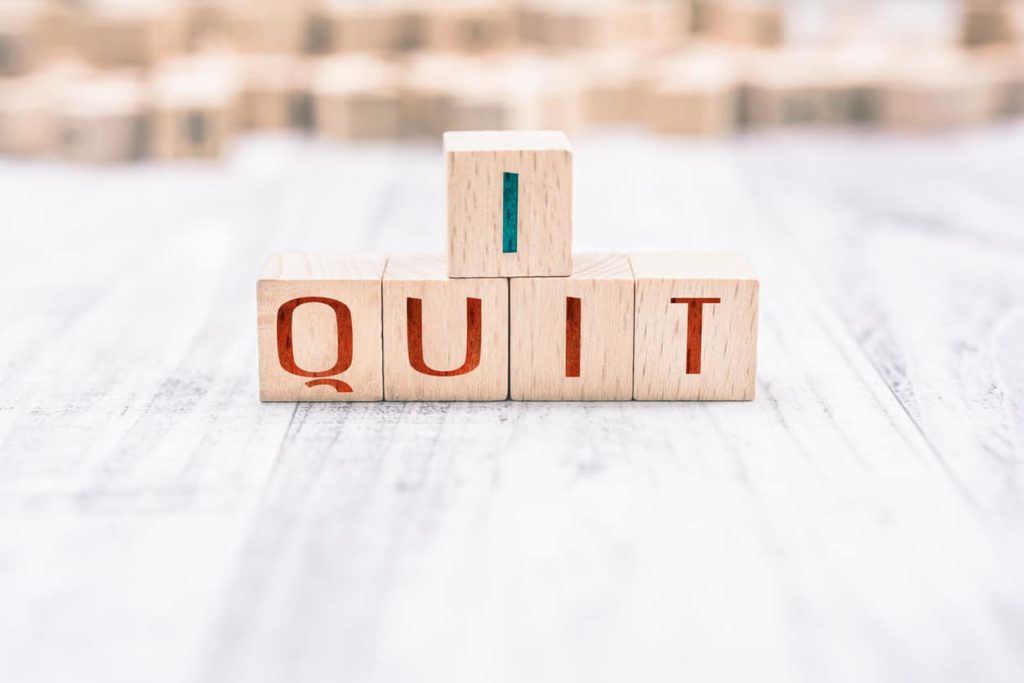
Heather candidly shares her experience of navigating alcohol and attempting to quit drinking, revealing how this monumental decision became one of the kindest acts she could do for herself. She discusses the transformative effects of this navigating alcohol, including improved relationships and enhanced overall health. You’ll hear about the importance of kindness and compassion during such significant changes, as well as the emotional eating patterns that can emerge from societal norms surrounding alcohol consumption.
Throughout the episode, Heather invites you to consider your readiness for change, emphasizing that prioritizing your health and happiness is paramount. With insights into midlife nutrition, mindful eating practices, and the seven pillars of abundance, she provides valuable nutrition advice that resonates with anyone looking to live a healthier lifestyle. Whether you’re navigating menopause health or exploring sustainable eating, this episode is filled with personal food journeys and culinary wellness tips that you won’t want to miss.
As you listen, think about your own relationship with alcohol and the societal narratives that may influence your choices. Are you ready to take a step towards a healthier, more fulfilling life? Tune in to gain the inspiration and tools you need to make informed decisions about your drinking habits and embrace a path of well-being. This episode of Real Food Stories is not just about alcohol; it’s about reclaiming your power and making healthy lifestyle choices that align with your values.
Join Heather on this transformative journey and discover how navigating alcohol can lead to a deeper understanding of yourself and a more vibrant life. Remember, your health is your wealth, and every small step counts towards a brighter, healthier future!
I would love to hear from you! What did you think of the episode? Share it with me :) Support the showLet’s Be Friends
Hang out with Heather on IG @greenpalettekitchen or on FB HERE.
Let’s Talk!
Whether you are looking for 1-1 nutrition coaching or kitchen coaching let’s have a chat. Click HERE to reach out to Heather.
Did You Love This Episode?
“I love Heather and the Real Food Stories Podcast!” If this is you, please do not hesitate to leave a five-star review on Apple or wherever you listen to podcasts.
Speaker #0
Well, hello, everybody, and welcome back. And if you are just tuning in with me for the very first time, it’s so nice to meet you. And I’m really glad you’re here with me today. I am your host, Heather Carey, nutritionist, chef, mom, and a woman who has been around the block with food. I want to open up about real food in relation to health, weight, and our bodies so you can make peace with what you eat. Hey everybody, I wanted to bring up something I’ve never talked about before on this podcast and that is my relationship with alcohol. I’ve talked about weight and body image in great detail and the many realizations I’ve made over the years so I could make peace with my body and how I nourish myself. But full disclosure, throughout that whole experience and time in my life. And for my life before that, I was using alcohol no differently than I was using food for emotional reasons. So I believe truly that a discussion about alcohol is as important because for so many of you and for me, we are literally defined by drinking. If you drank, and I’m making an assumption here that you do, because I know… way more people who drink alcohol than who do not drink. I’m going to suppose that you drank for many, many reasons, even some that you never even considered. That was definitely my story with drinking. In short, my life very subtly revolved around drinking. It dictated my social life, my celebrations, holidays. and a million other scenarios that I will dive more deeply into. A lot of people I know attempt to do dry January post-holiday as a way to take a break from booze and unravel all that was done in December. I used to try that too every new year. But January usually got pushed into February because, well, it’s my birthday mid-January, and how could I not celebrate with champagne on that day? Then February would have its own share of excuses. It was Valentine’s Day, possibly a vacation to a sunny spot. There was always a reason to delay, always some event. And then by March, taking a pause on drinking was typically forgotten. And if you know my story by now, trying to pause drinking and take a break lasted as long as my latest diet. A good part of my journey to make peace with my body image focused on food and weight loss and making peace with eating. Even though my relationship with alcohol had been as meaningful as my relationship with food, I’ve chosen not to dive too deep into that story because quitting alcohol felt a little more complicated and difficult at times. Even though the outcome is pretty much the same. It’s really a whole story within itself. I’ll also admit, I felt a little ashamed talking about this story. We live in a society where alcohol is completely okay and fine and accepted. And I felt like I was having a problem with my drinking. So it felt a little embarrassing to me. But I’m sharing it now because quitting… drinking for me ended up being one of the kindest, most compassionate things I have ever done for myself. And if you’ve listened to a number of my episodes, you have heard me talk about kindness and compassion and quite a bit. And so today I feel compelled to share this story because I know for a fact that there are many, many women and men who either struggle with alcohol, question their drinking, or simply just curious about what it would be like to give it up. They know they’re having an issue with it and are curious about what that would be like. So I thought with all the hype around taking an alcohol break at the beginning of the year, that this would be a great time to share my journey. Now, the beginning of my alcohol story was not much different from my food story, like I said. But unlike the judgment around bodies and diets when I was growing up, alcohol played a huge social role in my family. The scotch and soda were used to end my father’s workday, to help relax, and of course, to socialize. We always had a fully stocked liquor cabinet at home. And as I got older, drinking was just very acceptable and even encouraged a lot. You drank when you were happy. You drank when you were sad, to relax, to hang out with friends. I drank. a lot because it gave me more courage. I could talk to boys easily. I felt bold when I drank. But the fact is, drinking in our society has always been encouraged for these reasons. This did not come from my family’s idea of drinking alone. I certainly don’t want to blame all of society for the fact that I was drinking as a teenager. It sometimes feels easier to point a finger at an excuse to avoid taking your own responsibility. But the fact is, I don’t feel good about it. I really never felt good about drinking. I could say that all the kids my age were doing it. I even imagine that there were other kids my age who were studying hard, had parents who adored them and had great families. They had parents who cared about whether they were drinking or not. I did not. By the time I got to college, I was a pro. I felt sorry for all those kids who were drinking for the first time when they entered freshman year. Those were rookies. And by the time I was married and in my 20s and then in my 30s and a new mom of twins and a younger one, the societal norms really ramped up for me. I didn’t gather with friends without assuming there would be alcohol there. And alcohol was always encouraged. The society I lived in as a young mom said that we moms need to chill out. We deserved our five o’clock wine time. I would gather with my other young mom friends and our babies, commiserating over a drink because how else did you cope with bed and bath time? Most of my friends and even my husband were totally surprised when I announced that this time for real, I was taking that 30 day booze break. I did not fit the profile of a heavy drinker or an alcoholic, and I never considered to be. In either of those categories, Jolene Parks, a sobriety coach, coined the term gray area drinking, that blurry line in between where even though everybody’s doing it, you are questioning your own drinking. You feel deeply that something is just not right. You don’t look the part or act the part, but you just know that you don’t want to waste another Saturday morning hydrating, taking supplements and pushing past a slight hangover. So I decided it was time to quit, for real this time. After a Saturday night party I had gone to with a bunch of friends and my husband. I wasn’t planning on this day to happen. It wasn’t even January. It was a random weekend that could have been any other day. But I woke up in the morning with a headache and a terrible night’s sleep because those are the consequences of your decadence and you I just knew with all my intuition, I just knew that it was time. And this time I took it seriously, as seriously as when I decided to deal with my weight loss in a totally different way. I wanted to see freedom on the other side. And I was wildly curious to see what my life would feel like and be like on the other side of 30 days. But I wasn’t doing this alone. I also knew from my weight loss experience that this could never happen unless I gave myself all the kindness and compassion in the world. Beating myself up or berating myself was not an option. So first of all, I bought any book I could get my hands on that’s centered around quitting drinking and also more specifically on women quitting. And turns out… that there is a lot of them. Annie Grace, for example, The 30 Day Solution, and Laura McCowan, to name a few. Go on Instagram and search quitting drinking and the number of people is endless. And that’s a good thing. That’s the good thing about social media. If you’re looking for other like-minded people and you can’t find them in your close circle, there is no doubt someone on Facebook or other social media is no different from you. So I joined groups and I followed anyone I thought would help support me. I revisited my why, and I’ve talked about this many times on other podcasts, my deeply held reasons for letting go of alcohol that would keep me going when it felt like too much. My core reasons for quitting drinking were not much different for me than my reasons for wanting to lose weight for good. First of all, I’m a trained nutritionist. I would be flat out lying if I told you that drinking alcohol was good for you. I know that alcohol is one of the most toxic poisons you can put into your body, but more on that in a minute, and I’m going to get back to that. My other whys centered, again, around my kids and my health. Knowing what I know about alcohol, I could not feel at peace about the possibility of creating a health issue that I would be responsible for. Even though I am a very healthy eater, I was starting to get labs back. from doctors that did not reflect this. And the one sticking point for me was alcohol. I’m going to stray from my story for a bit to give you some facts about alcohol and a few that came to light in the past few years. Now, you might be saying to yourself, oh, geez, not another PSA for quitting or cleansing or detoxing. And seriously, when I drank, I felt the same exact way. I knew all these things. I knew drinking wasn’t good for me. Of course, I knew the harmful effects of alcohol. I’m the nutritionist. But why did even medical doctors tell me that a glass of red wine a day was healthy for me? I remember being pregnant and my doctor encouraging me to relax with a glass of wine. Yes, and that was not that many years ago. But the fact is, there is no safe level of alcohol. And this is rooted in science. This is not just me saying this. The World Health Organization spells out this very clearly in a research report that just got published this year in 2023. There is no safe level of alcohol. Ignore the outdated data of the one drink a day for women and two for men. The more you drink, the more the risk of cancer and other health issues goes up. That is why there truly is no safe level of drinking. Just like there are no safe levels of cigarettes smoked in a day, does everybody develop health issues as a result of drinking? Well, no. There’s always the outliers, the people who smoke two packs of cigarettes a day or drink a couple of bottles of wine a week and live to 95. But my own personal reasons and my larger why of being responsible for my health outcomes is what keeps me from drinking now. I don’t know about you, but when I used to go along with those old guidelines or if I was still drinking when that WHO study came out, I would laugh a little because seriously, whoever just drank one drink or thought to never drink because of safety issues. Again, I always tried to justify the false benefits with what I really knew about drinking. It’s the old see if we can dodge the bullet scenario. Now I want to be clear about something and remind you that this is my story and it’s not yours. You might feel totally okay with your drinking and that is fine with me. You might secretly feel like I had felt. I think that I am a very typical woman who grappled with a very common problem and a question. Is alcohol interfering with my peace of mind? Mostly all of the women I see in my coaching practice are confronted with the same question. Many of them are starting to have health issues that may reflect their alcohol use. So for me, the short answer was yes, alcohol was interfering with my peace of mind. But the truth is, the marketing and beliefs around alcohol are enormous. How many of you celebrated your kid’s 21st birthday and cheered on the fact that now they could go to bars with you, as if drinking legally is a rite of passage? That alcohol is benign, especially for young adults, that we all did it? Me too. I feel fortunate, so fortunate, that I stopped drinking before those milestones happened with my kids. It felt incredibly important to me that my relationships with them did not center around drinking with them. That was another one of my whys. If you haven’t picked up on society’s messages about alcohol, the good as well as the bad, then you are either not focused on drinking at all, or you are so focused on drinking that you don’t want to look at it. And here’s what I mean. There are two totally different opinions on alcohol. The narrative that says we can’t live without it, and the narrative that says we can’t live with it. And it’s no secret that drinking is a toxin. It’s a chemical that when consumed sets off a firestorm of reactions in your body, not to mention the harmful effects on society. To make my point clear, here’s a couple facts from the Institute of Health. Drinking too much can harm your health. Excessive alcohol use led to more than 140,000 deaths and 3.6 million years of potential life lost each year in the United States from 2015 to 2019, shortening the lives of those who died by an average of 26 years. Further, excessive drinking was responsible for one in five deaths among adults aged 20 to 49 years. The economic cost of excessive alcohol consumption in 2010 were estimated at $249 billion, or $2.05 a drink. Alcohol use is associated with heart disease, diabetes, seven different cancers, including breast cancer, high blood pressure, stroke, liver disease, digestive problems, dementia, immune system issues, not to mention bloating, weight gain, sleep issues, heightened anxiety, and depression. So yeah, I knew all of this. And there was a big part of me, actually most of me, that really cared about it. But not enough of me. There was always that small part of my brain that wanted the dopamine rush of the first sip of wine more than I wanted to face the facts. Society was certainly working against me. At the time, I don’t think I even knew a single person who didn’t drink socially. When I quit drinking, I had an unbelievable realization of how much alcohol dictated my life. It’s Friday, you buy a bottle of wine. Having a stressed out day, a glass of wine. I’m bored, I’m sad, I’m lonely. It all seemed to get fixed temporarily with a glass of wine. This was the biggest revelation for me. The many, many habits and association I fixed to drinking. I do believe that a lot of people do have the desire to stop drinking you might be like me and wonder if you drink too much or if it’s interfering with living your life and then those thoughts how on earth do i socialize without alcohol how do i help myself chill out without drinking i fully understand i get it relearning habits and facing feelings head-on has been the biggest challenge in regard to me stopping drinking I no longer had or have alcohol to numb me out. I had to and still have to face life head on and totally exposed. So I gave my alcohol experiment 30 days. I would just focus on one month. I worked it hard. I journaled every day. I listened in online to groups. I read my books. I took this on like a research project. And I couldn’t… wait to check off day 30 on the calendar. And day 30 came and I challenged myself again because I had never in my life said that I didn’t drink for 60 days. And then 60 became 90. And then I challenged myself with a year. Like I said, the marketing around alcohol is out of hand. Celebrities promoting alcohol, owning their own tequila labels or vineyards. The sayings, it’s five o’clock somewhere in the world, moms just need their wine, words that I had joked about, and now I was analyzing and seeing the truth. We glorify alcohol. Advertising says we deserve to chill out and to relax with a glass of wine. And don’t get me started on the marketing of alcohol to women specifically. Moms can’t possibly cope without wine in the evening. How else would we get through bath and bedtime? Girls nights out. pink colored drinks. Alcohol is marketed to make you feel more youthful, bold, like your old self. I started noticing the fitness industry linking together with booze. Yoga happy hour classes? Seriously, do you need to relax with yoga and then go Taiwan on? Yes, if you see alcohol as the reward at the end of your hard class, then yes. And yes, of course, working out and then meeting for a drink makes total sense. It did for me too. When I made it a year alcohol-free, I started negotiating with myself. I had learned so much about… My habits and my feelings about society’s views around drinking and the alcohol industries pull on people to drink. And I felt good. My sleep was good. Some things did feel really hard. Having to deal with my emotions head on was difficult, but incredibly rewarding. We need to feel all our feelings and not discriminate. But I asked myself, did I totally need to quit drinking? What if I had a glass of wine every once in a while? Could I possibly and reasonably do that? Do I even want to do that? There was a big part of me that could not ever imagine tasting alcohol again or getting to a point of being tipsy. I had trained my brain out of that association. But still, when everybody around me was drinking, I could see how easy it was to convince myself to start again. I could see how easy it felt when I was having a hard day to want to just have a glass of wine. I knew I could quit. I had done it and survived it. And then I started reading about decision fatigue. Decision fatigue starts happening when you wonder, like I had done, if you can manage something that in reality is totally unmanageable. I went through a lot of scenarios like I had done in the past when I was you trying to, quote, moderate my drinking. I would only have wine on the weekends. Or if I did go out, I would not have any more than two drinks. And then the fatigue set in. What if it was a Tuesday and it was a friend’s birthday dinner? What if I did have more than two drinks when I went out? What if it was a Monday? Would I not drink then? I was consistently breaking those rules. And now… a year in, I realized that trying to set rules for how much and when was impossible when it came to drinking. It was just exhausting thinking about it. I had made so much progress with myself. It just felt like a no to me. And just saying no felt like a huge relief. I didn’t have to try to manage anything about it anymore. Now we are in February and I wanted to ask you again. How did those resolutions or your dry January pan out for you? Because I honestly do not believe that the beginning of the year is the ideal time to start a new weight loss goal or a fitness anything for that matter or stop drinking. I truly believe that the time to start and commit to a new health-related goal is really without a season. In other words, The time to commit to yourself is when you know you are ready to do it. It does not have to be January 1st or the new moon or when the planets are all in alignment or whatever the excuse. The time to start is when you are ready to go. But how do you know when you are ready? How do you know you are ready to start, focus, commit, and follow through? How do you know when you feel like you have had enough, that something is no longer working? that the pain and regret simply outweigh all the good you could have? What is the difference between January telling you to start and telling yourself to start? Change happens when you are ready, and that often time happens when you feel you have reached a bottom. And everyone’s bottoms are different. For you, it might feel like you cannot handle one more night of feeling uncomfortable after eating way too much Ben and Jerry’s. Or it might feel like the last terrible night’s sleep because you drank a little too much wine. Or it may be more emotional. You may genuinely feel like you cannot take one more round of self-sabotage, self-deprecation, and beating yourself up for not having enough discipline, willpower, or strength. So suddenly your bottom and the one where you make change happen is from a wholly different perspective. The one where you think you are worth it. The one where you feel like saving yourself because you matter to you. You are not worthless, but worth it. You are worth changing for. At the time when I was drinking, alcohol seemed to help everything for me. Well, it helped nothing. It simply seemed to be the solution. It was the answer to having a bad day or being bored or my kids are exhausting me. or the belief that I have more fun when I socialize with alcohol. It’s Friday. It’s happy hour. The belief that I could not enjoy a meal without a nice glass of wine, that it helped me sleep better. Wine was comfort, answered loneliness, and was the answer to celebrating and relaxing. I was a very classic gray area drinker. I would not and still do not call myself an alcoholic. I wasn’t on the verge of losing my house or my marriage or my job. In fact, when I told my husband that I was taking a break, a real break from alcohol, Like I said, he was totally surprised. I feel like I’m having a problem with it, I told him. And don’t try to talk me out of it. What problem, he said. I don’t even think that you drink that much. Same came from my friends or family when I told them I’m taking a break. And the point is, I wasn’t drinking that much. It just was too much for me. It didn’t matter if they thought I had a problem with drinking. It just never was settling with me. Drinking disconnected me. from me and I knew it. I was never ever at peace with drinking because I knew better, because I knew that it was a short-term solution to my bigger problems, that it took all the vulnerability, fear, and courage away from my own self. Alcohol for me was a false friend. It was there when I thought I needed its solution and it would turn its back on me at any moment. I know that I will get a lot of pushback from this episode. very, very curious to hear from you and your take on alcohol. People don’t like to hear that something they love and depend on is not good for them, like sugar, for example. I am certainly not here today to tell you what you should do, only to share my story in the hopes that it may help somebody who also questions their drinking. And I hope to get the word out because feeling that struggle can cause you to feel a lot of shame. My good news is that you can do it. is that I never did decide to try drinking again. I am still working on me. That won’t ever change. It feels really hard sometimes, still, to not be drinking. My social life has certainly shifted, and it can feel lonely in a world of drinkers. But my relationship with my kids are solid. My marriage has never been better. I have no alarming labs to be concerned with. And I am up on an early Saturday morning exercising. All great reasons for me to stop. And as always, if you loved this podcast, please consider gifting me with a five-star review. It is so helpful for me to get the word out on real eating, our real bodies, and real food stories. Thank you so much and have a great week. Bye for now.