
Emotional Eating and Grief: Heather’s Personal Food Story of Loss, Healing, and Nutrition for Midlife Wellness

Have you ever found yourself reaching for comfort food in times of deep sorrow? You’re not alone. Join host Heather Carey in this poignant episode of Real Food Stories as she courageously shares her personal journey through grief and its profound connection to emotional eating and overall emotional health. After experiencing a significant loss, Heather opens up about the struggles she faced with grief, chronic pain, and the emotional eating patterns that emerged as coping mechanisms. This episode dives deep into the complexities of loss, emphasizing how everyone experiences grief differently and the importance of acknowledging and processing those emotions.
Heather reflects on her childhood experiences with grief, including the heartbreaking loss of her father, and discusses how societal expectations shaped her emotional responses. She introduces listeners to the concepts of ‘big T’ and ‘little t’ traumas, highlighting that even seemingly minor experiences can have a lasting impact on our emotional well-being and food beliefs. Throughout the episode, Heather emphasizes the significance of self-compassion, mindful eating practices, and the necessity of nurturing supportive relationships during times of grief.
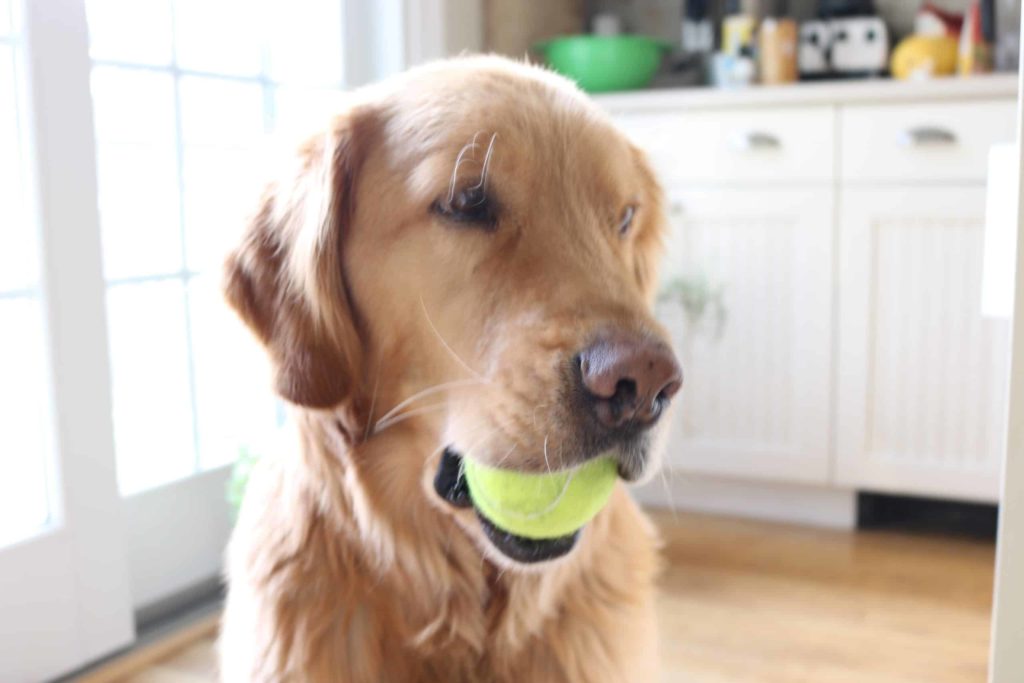
In a heartfelt moment, Heather shares her recent experience of losing her family dog, which stirred up past grief and underscored the need for space to grieve without judgment. This episode serves as a reminder that it’s okay to embrace our emotions and seek healthier coping strategies, especially when navigating the complexities of grief and trauma. Heather’s insights on emotional eating will resonate with anyone who has turned to food for comfort during tough times.
As a culinary nutritionist, Heather provides valuable nutrition advice and healthy eating tips that align with the themes of grief and emotional well-being. Her journey reflects the importance of understanding food and culture, as well as the role of family food influences in shaping our eating habits. Whether you’re interested in menopause health, midlife nutrition, or simply looking for personal food stories that inspire, this episode is packed with wisdom and compassion.
Join us for this touching episode of Real Food Stories, where Heather encourages listeners to embrace their emotions, navigate the challenges of emotional eating, and cultivate a healthier relationship with food. Tune in for insights that will not only enhance your understanding of grief but also inspire you to make mindful lifestyle choices that support your overall health and well-being.
I would love to hear from you! What did you think of the episode? Share it with me :) Support the showLet’s Be Friends
Hang out with Heather on IG @greenpalettekitchen or on FB HERE.
Let’s Talk!
Whether you are looking for 1-1 nutrition coaching or kitchen coaching let’s have a chat. Click HERE to reach out to Heather.
Did You Love This Episode?
“I love Heather and the Real Food Stories Podcast!” If this is you, please do not hesitate to leave a five-star review on Apple or wherever you listen to podcasts.
Transcript:
Speaker #0
Well, hello, everybody, and welcome back. And if you are just tuning in with me for the very first time, it’s so nice to meet you. And I’m really glad you’re here with me today. I am your host, Heather Carey, nutritionist, chef, mom, and a woman who has been around the block with food. I want to open up about real food in relation to health, weight, and our bodies so you can make peace with what you eat. Hi, everybody. I’m going to be totally upfront. I have had a very hard week of grief and a big loss. It’s why I have not been on the podcast recently, even though I had really every intention of recording a few episodes in advance just to keep the consistency. So as I’m starting this week and… More important, as I am working on how I am processing my grief, I thought it might be a very good idea to talk about it out loud on the podcast because I know that I am certainly not the only one who has experienced grieving and all the complicated feelings that go along with it for so many people. The way we handle our own grief and when we are grieving, the way others handle us, and react to us can be profound. For the last year and a half, I have been studying trauma and grief on a very personal level, particularly in its relationship to my chronic pain. And as a person who has experienced chronic pain to some degree for years, I was finally ready to look at it and get to the bottom of it once and for all. I know deep down that this was you more than simply a physical problem. There’s so much exciting research being done on the relationship between trauma, grief, and pain right now, and I have been fully diving into it. It’s not been easy at all, but I have been willing to really look deeper at myself and explore this relationship. And holy shit, like what a journey this has been. I started, I had very little understanding that stress could be related to pain. But as I dove deeper into this work, I now know that what I thought of as stress runs deeper than what I had even considered. We get used to what we know and have grown up with. We are, I think, in a little bit of denial. when we’re younger because it’s hard to know that there might be different options of coping. I have, in this process, in my process, learned about the past traumas that we absorb when we are either not allowed to process them or not given the space to do so. For a long time, I had always felt that, yes. I had gone through some things as a child and a young adult, but there’s so many others who’ve experienced so much worse than me. Children from physically abusive households, soldiers who’ve gone through war, or kids who have been in war. Those children deserve to have the trauma label, not me. And then I learned about two kinds of trauma, big T and little t traumas. Just because I didn’t fit the profile of a big T trauma didn’t mean I hadn’t had experiences that impacted me greatly. All of my experiences bundled together have created in me a person who is a people pleaser and a perfectionist who might feel on guard and look for danger when there is none. This high alert system can get confused in our brains. and for me, come out as pain. Pain is a physical symptom of fear. The goal is to teach your brain that you are safe. And back to grief. When I grew up, I had two very significant big losses in my life. The first was my father dying from cancer when I was 14. And then the loss of my youth and my health in a way. When I was diagnosed with multiple sclerosis in my 20s, There was not a lot of room for grieving losses when I was growing up. No space to process how you were feeling. I was given a time limit and there was not much more tolerance for it after that. It was cry it out, get it out and be done. So I absorbed it and I internalized my feelings a lot. And it came out in different ways because when you are in denial or you are avoiding it’s going to come out some other way. So for me, it was particularly acute through emotional eating and drinking. These two things were much more acceptable and allowed in my family. Now, when I lost my father, I had no stable structure for processing that grief. Although my dad was very sick with cancer for a very long time. There was really no warning or preparation to let me know that the end was near. None. In an ideal world, there would have been conversations, letters written by my dad. But this was the early 80s. Or maybe it was my parents’ way of handling deep feelings. I don’t know. There was nothing to give me the heads up that he would pass away on the day that he did. Now, I… Compare this in a way to that feeling of getting hit with a wave in the ocean. When you’re in the ocean swimming and you see the wave coming and there is no avoiding it. Of course, no one wants to get hit with the wave. And usually you have no preparation for it hitting you. As it comes for you, there is no choice but to give in and take the hit and then move on. Grief to me back then was how I thought that worked. I had no skills, no learning lessons from past experiences, and certainly no adult telling me otherwise. But grief needs to get released somewhere. And I found food. In the days following my dad’s death, more cookies, brownies, and other sweets trickled into my house than I could ever imagine. People were just dropping off baskets of baked goods. Sugar became my best friend. Desserts were the ultimate comfort. And that is how I learned to soothe myself with a cookie if I was having a hard day, or I was tired, or come to a few years ago having a fight with my husband, or anything that I feared. Sugar could handle it all and take care of it for me. But we know how that goes. Sugar and even alcohol, which I’m going to talk about next week, is a false fiendish friend. It lures you in with the promise of soothing and then kicks you in the ass. You always feel like you need more. It’s never enough to make things better or change anything at all. When you have nowhere else to place your trauma or grief, it needs to get processed somehow, some way. And the food is certainly comfortable. creamy, salty, crunchy, sweet. If you have memories of food holding your hand, it can be a hard habit to unlink. I certainly have done a lot of unlinking and learning about my emotional connection to food over the years. And knowing that it will always be there to some extent. Awareness of emotional eating is key. Being mindful of hard feelings and my reaction to them is also vital. So is compassion and kindness to me. to fill in for the compassion I missed out when I had to grieve things in my past. This past week, I had to make the decision to put our family dog to sleep. And if you are a dog owner or have been a dog owner, I know I do not need to tell you what it feels like to lose a pet. And if you don’t, I can tell you that it is absolutely excruciating. and even more devastating when you get terrible news and the vet tells you he has days to live. The pain and guilt from having to make decisions about your dog’s life is insurmountable. 12 years ago, we lost our last dog, Finnigan, and I remember saying I could not handle the loss. And a week later… I was calling the breeder to secure another dog from her next litter, and I wanted him to be exactly like my old dog. I couldn’t handle the loss. I wanted the same as what I had. Now looking back, I don’t think I gave myself enough time and permission to let myself just feel the loss of my beloved older dog who meant so much to me and my family. And that is a learning lesson for now, to give myself all the time I need to feel this loss. When we got our dog Buck, he was… Almost identical to, it looks, to our older dog. But they were, personality-wise, anything but. Buck was obsessed with water. I even once considered reaching out to the Coast Guard to see if they needed a highly trainable rescue dog. Buck was on a search and rescue mission with a tennis ball or stick relentlessly. There was no dog like Buck. And I know that anyone who knew him would wholeheartedly agree with me. He was so quirky and focused on his mission while still being the sweetest, most people-friendly golden retriever there ever was. I have an ache in my heart for this dog that I know will never subside. I miss him terribly. I miss him in the morning and I miss taking hikes with him or swimming in the pool with him. Buck would… easily swim year-round, no matter what the weather or the time of year. This grief seems to drag up past grief. I’m thinking about my old dog. I’m thinking about other pets I’ve lost, my father, my mother-in-law recently just passed away. I’m thinking of my fears coming up, my future grief, my surgery that I certainly didn’t ask for, the pain I will be experiencing. And knowing from past experiences what acute post-surgery pain can feel like. When I had to make decisions about Buck, I also knew this pain. I knew what it felt like to drive him to the vet, say our final goodbyes in that back room, then walk back to the car and the short drive home. I knew exactly how long it would take to… drive back to my house and the excruciating ache of walking back in to my mudroom without my dog and all of the reminders of him there. His bed, his dog bowls, his collars, leashes, his bones, his tennis balls, stuffed animals. I knew what it was going to feel like in the few days after listening for him in the house, the feeling that he is just in the other room sleeping, wanting to go take another walk with him in the woods. And now here I am with a new set of emotions and a very, very deep grief for the loss of my dog, the companion who always stuck by my side, a true best friend. I am doing things differently this time. Right now, I am giving myself full permission and the time to grieve. I am only talking to people who truly understand my grief. In the past, as a recovering people pleaser, I would profusely apologize for taking other people’s time when they listened to me. And of course, I felt deeply that I only had a certain number of days that I could, quote, feel sorry for myself. no more. I am no longer scared that my grief and pain will last forever, that if I continue to cry, I might cry for months. or that I should feel ashamed or guilty for feeling what I am feeling. There are very well-researched, well-defined stages of grief. There’s denial, anger, bargaining, depression, and acceptance. And I can feel myself cycling through all of them. If anyone tries to tell me to move on, to get over it, he was just a dog, or ask me, When I’m getting another dog, they will not be able to come into my circle. I know firsthand that other people handle grief in all sorts of ways and that many, many people were like I was, unable to handle loss, much less the loss that others are experiencing. Those people are not allowed to enter my circle right now. I have immense gratitude for any friend or family member who has taken the time to listen to my pain, but I will hold boundaries around others who are not able or willing or want to try and tell me how to handle my loss right now. I am honoring myself fully with all the kindness, compassion, and self-care that I need for as long as it takes. I am also being very mindful of any emotional eating that might come up right now. But interestingly, and not surprisingly, it hasn’t. Because I know why. Because I have many, many other tools now to help me with difficult emotions. I made sure I told my friends and I talked to the ones who wanted to hear me. I’ve spent time writing down my feelings and my sadness. I am pausing and taking many deep breaths. And most importantly, I am letting myself cry a lot. I’m also allowing my feelings to come out and I’m releasing them as they come up. It feels so painful, but so freeing at the same time. I know these feelings will not last forever. And I will get to the last stage of grief, acceptance. In time, when the time is right for me. In the meantime, I am here processing and doing things differently for myself, and this is progress on a very profound level. I am hoping that in the future, in the very near future, that the conversations around grief and trauma can be recognized and not stigmatized. It’s important work. It’s important for our health, our stress, how we… choose our food, how we might eat our emotions, and I’m hoping to continue this dialogue. So please be sure to leave a comment in your thoughts on grief and trauma and how you feel you handle these emotions. They’re not easy. They are very hard to work through sometimes, and I understand. I would love to hear from you. Please comment, rate, or review. And bye for now. And as always, if you loved this podcast, please consider gifting me with a five-star review. It is so helpful for me to get the word out on real eating, our real bodies, and real food stories. Thank you so much and have a great week. Bye for now.