Overcoming Food Confusion: Navigating Nutrition Myths and Embracing Real Food Choices for Women’s Health

Are you tired of the constant battle between ‘good’ and ‘bad’ foods? Join host Heather Carey in this enlightening episode of Real Food Stories, where she unravels the tangled web of food beliefs that have left so many of us confused and overwhelmed. As a culinary nutritionist, Heather brings her expertise to the forefront, offering insightful nutrition advice that empowers listeners to break free from the shackles of diet fads, misinformation and overcoming food confusion.
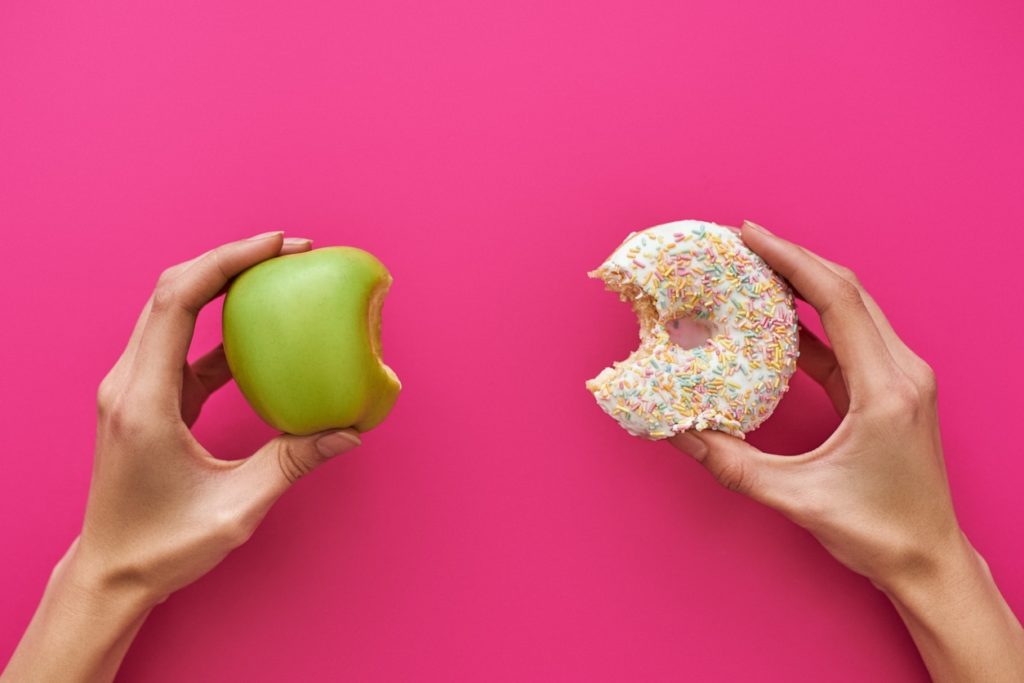
Throughout this episode, Heather dives deep into the historical context of dietary recommendations, shedding light on the vilification of fats in the 1980s that led to an explosion of processed foods and rising obesity rates. With her friendly approach, she emphasizes that food should not be strictly categorized into ‘good’ and ‘bad’—after all, every food has its unique pros and cons. This perspective is crucial for those navigating menopause health, as understanding our bodies and their nutritional needs is vital for maintaining a healthy lifestyle.
Have you ever felt guilty for indulging in your favorite treat? Heather addresses the common dietary concerns surrounding gluten and dairy, advocating for a balanced viewpoint that prioritizes individual health needs over alarmist trends. By encouraging mindful eating practices, overcoming food confusion, she helps listeners cultivate a positive relationship with food, allowing them to enjoy their meals without fear or guilt.
As we explore the realm of processed foods, Heather clarifies that not all processed options are detrimental to health. She distinguishes between minimally processed and ultra-processed foods, providing valuable insights for those seeking to make informed choices in their culinary journeys and overcoming food confusion. Whether you’re interested in weight loss stories, family food traditions, or sustainable eating, this episode is packed with practical healthy eating tips that resonate with women in midlife.
Join Heather as she empowers you to navigate the complexities of nutrition with confidence, encouraging you to embrace your personal food stories and the rich tapestry of food and culture. With her expert guidance, you’ll learn to overcome food confusion and make healthy lifestyle choices that align with your unique journey. Tune in to Real Food Stories and discover the seven pillars of abundance that can transform your relationship with food and enhance your overall well-being.
I would love to hear from you! What did you think of the episode? Share it with me :) Support the showLet’s Be Friends
Hang out with Heather on IG @greenpalettekitchen or on FB HERE.
Let’s Talk!
Whether you are looking for 1-1 nutrition coaching or kitchen coaching let’s have a chat. Click HERE to reach out to Heather.
Did You Love This Episode?
“I love Heather and the Real Food Stories Podcast!” If this is you, please do not hesitate to leave a five-star review on Apple or wherever you listen to podcasts.
Transcript:
Speaker #0
Hi everybody and welcome back and if you are just tuning in with me for the very first time, it’s so nice to meet you and I’m really glad you’re here with me. I’m your host Heather Carey, nutritionist, chef, mom, and a woman who has been around the block with food. I want to open up about real food in relationship to health, weight, and our bodies so you can make peace with what you eat. I hope you’re having a very nice fall. Here where I live in the Northeast, it has been typically cool and drizzly. Days are definitely getting darker and it makes for a great time to settle in to indoor activities like cooking and baking and just overall resting and honoring the lack of sunlight. Now the holidays are right around the corner, which I know will be a busy time. for most of us. And the holidays also mean a lot of mindless eating and drinking and partying. And I will be here for all of that, helping to guide you through the busiest time of our entire year. In the meantime, I am continuing my quest to share stories around real food and end the confusion. And today I wanted to talk about… this concept of good foods versus bad foods and the scary messages we get from some of those health gurus and doctors I talked about in the last two episodes. Now, if you haven’t taken a listen, definitely tune in. In those last two episodes, I called out a few specific health professionals. And if you want to call a psychic with a half a dozen books on how to treat your health or a naturopath who does nothing but sell expensive products. health professionals, by all means, be my guest. My biggest takeaway from those episodes is that not only are some quacks without merit, but they do nothing but stir the pot of food, fear, and confusion, only to try to convince you to purchase their products or else. It is an unethical, crazy-making cycle. So today, I wanted to get clear on this notion of what exactly is good and bad in the world of nutrition, what we want to lose from our diets, and what the quacks have gotten totally wrong. I wanted to ask a question. How did food get put into these good and bad categories anyway? I can take you on a wild ride of health scares, better science, and a lot of flawed science, but the truth is food is confusing, and we are still learning so much about food and its relationship to our health. Now, for hundreds of years, there have been people who know when to see opportunity, and opportunity is at the heart of this confusion. Food manufacturers know this, and so do health gurus and diet quacks. When there is confusion, people naturally want answers, and there is plenty of mystery around the question of what should I even be eating anymore? always been crazy diets based on restriction and eliminating certain foods. But the 80s is when food and nutrition really peaked, at least for me. At this time, researchers concluded that fat was the problem contributing to obesity and heart disease, and the world followed suit. Fat-free food products hit the shelves, fat-free diets, fat was evil and should be vilified. This in turn, helped nothing. Heart disease went up, obesity rates rose, and highly processed foods and sugar continued to infiltrate the national food supply. But if fat-free was not the answer, then what was? And so I think it began in earnest, the birth of hundreds of health coaches and doctors who called themselves food experts. Food got put into more good-bad categories, and it hasn’t stopped since. Now, today, it’s the keto diet, which is almost all fat. We shun whole grains. We think protein is the correct way to eat. We believe that certain fruits and vegetables are bad or dangerous, and let’s not get started on sugar and plant oils. It is the wild west of food out there, and there is an opportunity to instill a lot of fear and exploit people in the process. I’m going to go out on a limb. and say that in reality, there are no bad foods. Food provides us our nutrients that we need to survive, and I imagine we can find pros and cons to every food, apples, carrots, everything included. Yes, I have talked about highly processed foods on this podcast, and I’m going to talk about them again today. But if you are going to tell me that come Halloween, you are not going to dip in to your kid’s Halloween candy, all highly processed, I have a hard time believing it. You’re not you doing that every day, I’m assuming, or maybe you are, and that is okay too if that is how you want to eat. My point is that we need to get educated on what food is and make our choices from there. I’m going to give you the information and you then have free will to do with it what you want. I for one know that highly processed foods contain a lot of chemicals and highly appealing additives that make these foods hard to resist. So I mostly stay away from them, just like I want to stay away from hard drugs or alcohol. I find these foods to be that addictive. Now let’s jump in and get clear on what we are even talking about when I say highly processed foods or even processed foods. You may have heard me talk about processed foods and that term has gotten lots of buzz in the medical community and health world. We all know that processed foods have gotten thrown into the bad category of food, and I want to clear up the confusion of what exactly a processed food is, because not all processed foods are bad for you. The definition of what a processed food is. A processed food is any raw agricultural commodity that has been washed. cleaned, milled, cut, chopped, heated, pasteurized, blanched, cooked, canned, frozen, dried, dehydrated, mixed, or packaged, anything done to them that alters their natural state. This includes adding preservatives, flavors, nutrients, and other food additives or substances approved for use in food products such as salt, sugars, and fats. So thank you, Mayo Clinic, for helping with that definition. In the world of good and bad foods, a processed food can have many definitions, as you can see. And so here today is not what I am talking about when it comes to food. You might want to crowd out of your diet. And when I say diet, I mean your way of eating, not a diet book. So there are different categories of processed foods, like we had seen, and some are actually good for you. Frozen foods, for example, are processed. Vegetables go from picked to sometimes steamed to flash frozen to preserve their shelf life. Frozen fruits and vegetables actually have a higher nutrient quotient because they are picked and frozen so quickly. Sometimes fruits and vegetables and some meats are dehydrated and dried. This is a processing technique to preserve their shelf life. It doesn’t make them bad, but taking the water out of produce does up the sugar content, so we might want to consider these a treat. Sometimes we can ferment foods as a way to preserve them and actually up the good bacteria. Sauerkraut is a great example of this. Grinding grains into flour is a form of food processing. In a turn, we can make bread or other baked goods. Bonus points if you use whole grains mostly and not white refined flour. Minimally processed foods have few ingredients on the label. Take tahini paste, for example. Tahini is a staple in Middle Eastern foods and is made by grinding up sesame seeds into a paste, sort of like peanut butter. But read the label. Tahini has one ingredient, sesame seeds. And speaking of peanut butter, peanut butter should have only one to maybe two ingredients, peanuts and salt. If any other ingredients show up on the label and make you ask why, they are probably unnecessary, like palm oil, for example, or corn syrup. In short, I’m not talking about most of these foods that I mentioned above. Processed foods go totally awry when food companies add in preservatives, way too much sugar, salt, and unhealthy fats like soybean oil or palm oil. in order to make these foods taste more appealing. Think flavor-blasted Doritos, cherry-flavored Coke, or Twinkies. I can’t believe that I used to love Twinkies when I was a kid, but can you blame me? They had just the right amount of taste bud flavor power to make you want to come back for more. And I just read the label again, because by the way, any food product that you are questioning can be found on the internet. they have to post the ingredients and nutrition information. So Twinkies. Like all of these highly processed desserts are the worst offenders. Sugar as the first ingredient, high fructose corn syrup, which is another name for sugar, enriched flour, processed flour, white flour. After that is tallow, which is rendered beef fat. Hmm, that one got me. And then a list of names I can’t even pronounce, all in the spirit of keeping our favorite childhood treat. alive and well and wreaking havoc on whoever eats them on a regular basis. And let’s not forget candy, store-bought cookies, high sugar breakfast cereals, McDonald’s, and other fast food. And I love the marketing around some of these foods. On the McDonald’s website, for example, if you look up the iconic Happy Meal, and just not the name of it, but all the marketing around it, you see pictures of a boy happily riding a scooter. The Frosted Flakes website shows sports pictures, athletes, and how they are supporting sports in schools. What they don’t mention is that they are also contributing heavily to the childhood obesity epidemic in this country. All these types of food are ultra-processed foods and only serve to jack up your taste buds so your brain gets used to a level of flavor that real unprocessed food would be hard-pressed to compete with. Now, ultra-processed food has been blamed for the obesity epidemic and many other chronic health conditions in this country. Now, I can’t stand alarmist headlines that are in the news only to sell newspapers and magazines, so you definitely might have come across one-liners such as this. But the fact is, ultra-processed foods account for about 60% of the calories being eaten and the food being sold in the United States. There are many sneaky ways that food manufacturers. make good food go bad. There are seemingly an endless array of food flavors and additives put into food, all to make these foods hyper palatable and overly appealing. They are way too easy to overeat and not be able to stop at just one. Sort of like alcohol or cigarettes if you have a propensity for these drugs. Ultra processed foods can be put into the category of a drug. They can be thought of as highly addictive and very hard to resist. And ultra-processed foods go through many iterations of tampering to make them highly palatable and shelf-life resistant. So many of these foods have so many preservatives that they can stay shelf-stable for years. Highly processed foods have also been associated with higher rates of colon cancer and overall early death. In fact, a recent study done in the British Medical Journal researched this and found that adults with the lowest quality diet and the highest ultra-processed food consumption were at the highest risk for all cause in cardiovascular mortality. A significant and Proportion of the higher mortality risk associated with an elevated intake of nutrient-poor foods was explained by a high degree of processing. And they went on to say that poor diets are responsible for more deaths than any other risk factor globally and are the leading cause of obesity and non-communicable diseases. Now, if you think you are not in the category of people who eat highly processed foods, Think about some of the foods you don’t even give a second thought to, such as a box of Kraft macaroni and cheese, for example, which contains sodium phosphate and calcium phosphate, two natural, I’m putting that in air quotes, preservatives. Just note that on the box, there are the words, no artificial flavors. No artificial preservatives and no artificial colors. But if macaroni and cheese had nothing to hide, why make a point to tell us this? Sodium phosphate and calcium phosphates are used to tenderize seafood and meats that are sold in the grocery store. They are, quote, again, natural salts, but they are preservatives nonetheless. But because they are natural, they are allowed to put that on the food label. Now, there are two camps in the world of nutrition, and they are very divergent these days. On the one hand, there are the nutrition quacks who will literally latch onto any food trend and scary food tactic in the moment to put foods into these very good and very bad categories. And on the other hand, in the spirit of backlash, and being totally sick of listening to these nutrition crazies like the medical medium, there has emerged a counterculture of all food is good no matter what. And this is followed up by giving us total permission to eat whatever we damn well want. The theory leans into an intuitive style of eating. If you are given full permission to eat what you Whatever you want, you can begin to listen closely to your inner voice. You will naturally learn to eat when hungry, stop when you are full, and you’ll want to eat with kindness for your body. Eating with permission gives you a choice. And when you love your body and yourself, you might want to eat what is very best for you. Now, of course, there are extremes in all camps. I see a lot of these body positivity nutritionists and health coaches. who are very thin and very in shape, talking up their former eating disorder that they had while being photographed eating donuts and pizza as if they have found the secret to eating, chowing actually, and staying waif thin. Listen up. A former eating disorder makes you relevant, but does not make you an expert on eating intuitively and does not give you permission to exploit vulnerable, confused people. I see it with young women. I see it with midlife women. And there is a huge explosion of exploitation with younger boys now. So do we need to call out these so-called food experts too? Maybe. Do we need to get public policies and laws in place? Or is this foodism? As in, should we be able to eat whatever, whenever? Now, I land somewhere in the middle of all of this food confusion, and I feel like it is my job to point out the exploitive food marketing that goes into both camps. But today, I really want to talk about what happens when we put good food into bad categories, and why does this happen? So like I said, in the last two podcasts, I called out the quacks, those medical doctors and health professionals who are actually allowed to call themselves doctors. And then everyone in between, including the medical medium Anthony Williams, who is not a doctor, nor does he even call himself a doctor. Rather, he gets his advice from spirit guides that have gotten him to write a total of eight ridiculous books on spiritual recommendations for how to eat to solve all sorts of health issues. These docs and alt-docs, as I like to call them, love to call out foods that are threatening to your health and are going to cast doomsday on your body and spirit. Forget talking about ultra-processed foods because you should already assume you know these by now. No, the perpetrators are going to make you question the everyday foods you thought were perfectly okay to eat. And I thought I would go through the most talked about foods and questions I get asked about and put an end to the confusion once and for all. So we’re going to address the two biggies, gluten and dairy, because I get asked more questions about these two foods than anything else. So let’s start with gluten. Every single person, like I said, I have talked to about health issues in the past couple of years has wondered if they should give up gluten. And I totally understand this. First, when you are desperate and looking for a cure to a health problem, you will believe anything in order for it to go away and just feel better. I know this firsthand. When I was first diagnosed with multiple sclerosis, actually 27 years ago, almost to the day, I was in a panic. I went to a few doctors, some of whom were riding the fringe of alternative cures. I stopped dairy. I took mysterious supplements, but not for very long because I was becoming more and more familiar with the world of alternative medicine and how really unregulated and wacky it can be. There were a few diets for MS that I had read about too. None of it was based in science or proven to work. And I slowly just walked away from all of that. Now, food trends, as we know, come and go, sometimes rapidly. But there is always something. And a few years ago, gluten was… and still very much is the enemy of the health world. Suddenly, people who had been eating gluten and bread for their entire lives were reporting that they just felt better after cutting out gluten from their diets. Now, if you have celiac disease, which is 1% of the population, you definitely need to cut out gluten. But if you were diagnosed as gluten sensitive by a naturopath or your chiropractor, you might want to think again. Gluten sensitivity does not show up on blood work or any reliable allergy tests. Reliable tests, not food sensitivity tests, which are highly unreliable. Sometimes there are foods that just make you feel like crap when you eat them, and there’s really no explanation for it. And for you, it might be bread and other gluten-containing products. The only way to really know this it. is by cutting it out of your diet completely for a couple of weeks and seeing how you feel. This is really the gold standard. And if after those few weeks you feel better and you add it back into your life and still feel like crap, well, then you might want to eliminate gluten for good. But why is this exactly? If it doesn’t show up in a test for you, why does it not feel good? Oftentimes when you cut out gluten, You might end up eating better in general. Gluten is found in so many highly processed foods. It’s the refined flour that you find in cupcakes, in Twinkies, pastries, and cookies. You might not know what to eat, so you end up eating more whole grains like quinoa and brown rice, and that makes you feel better. You might end up eating less and in turn lose weight and think it was from cutting out gluten rather than the fact that you just cut. down on your calories. Now, if you suspect you have a gluten allergy, please do yourself a favor and see a rheumatologist who specializes in celiacs, not your naturopath. Celiac is an autoimmune disease and should be treated by a professional, not with something you read from Grain Brain or Wheat Belly, those two books by David Perlmutter. These books create fear-mongering and should be absolutely ignored. Gluten and gluten-free diets are a hot business right now because they sell books and products. The fact is, we don’t need to have or not have gluten in our everyday eating. If you have celiacs or feel like you have a gluten sensitivity, then by all means, eliminate it from your diet and see how you feel. But be sure to replace it with other healthy whole grains, such as brown rice or quinoa or millet. Do not turn to the gluten-free aisles where there is just a ton of highly processed gluten-free junk. Yep, the gluten-free food manufacturers jumped on the wave too. So make your own baked goods that are gluten-free. Use almond flour or oat flour to make them and you will be all set. Now let’s talk about dairy. Is this also fear-mongering or should we lose this food group altogether. Why does every one of the health gurus tell you to stop eating dairy along with gluten? I mean, seriously, what is wrong with dairy? So let’s look at dairy the way we looked at gluten. Some people are lactose intolerant, meaning they lack the enzyme lactase that you need to digest the lactose, which is the sugar in dairy. Now, if you are lactose intolerant, you might get symptoms like bloating or other digestive issues. Some people can tolerate some kinds of dairy, like hard cheeses, for example, and not yogurt. But this number is small. In fact, around 10% of people are thought to be dairy sensitive. And to set the record straight, there are people who are definitely fully allergic to the proteins in dairy or just dairy in general and cannot tolerate it at all. So if this is the case for you and you have been tested by an allergist, then you definitely need to find dairy alternatives, and that is not difficult to do. Here’s another fact. Just like gluten, we don’t need to eat dairy to survive. Dairy products are not an essential food group. Dairy is an amazing source of calcium and vitamin D and protein, but we can certainly get these nutrients from other foods. However, women especially better make sure they are getting good sources of these nutrients from other food sources. This is one key reason why the government recommends three cups of milk or three servings of dairy every single day. Now, it may be argued that the dairy lobby, which is very powerful in this country. infiltrates and steps in, but dairy really is an easy source of calcium and vitamin D. If you’re questioning dairy and getting calcium and vitamin D from milk or cheese or yogurt, there are definitely other sources. Those might include sardines, which are one of the best sources of calcium and vitamin D, tons of kale, because it doesn’t have that much calcium in it, so you would need to eat a lot of it. Now, are you eating these foods on a daily basis? Really think about that because you definitely need these nutrients and we are lacking in them quite a bit. So if most people are not lactose intolerant and if dairy is such a good source of certain nutrients, then what is it about dairy that makes the alternative health gurus go nuts? Is it because the government is kind of involved in dairy? And my other question is… that dairy might not be necessary for you, but is it bad for you? Is it inherently bad for you? On Dr. Hyman’s website, the doctor I called out two episodes ago about the Dr. Quacks says that you should avoid dairy at all costs. And he has this in big capital letters. He also goes on to say, this may sound shocking to you, but dairy… also contains antibiotics, hormones, inflammatory properties that are just terrible for your health. Now, Dr. Hyman, I wish you would stop embellishing the facts and using scare tactics to try and convince people to buy your books and supplements. Those words, antibiotics, hormones, inflammation, are intimidating to people. They strike fear. So I’m going to clear up a few misconceptions about what he has on his website and about dairy in general. in case you have been scared to. First, I want to say that even if you tolerate dairy products, you do not need dairy. It is not a dietary staple, but it is an easy, convenient way to get calcium, vitamin D, and protein into your everyday eating. And here are a few things to consider with dairy as well. On the flip side, it is high in saturated fat. If you choose to drink… whole milk, it is very high in saturated fat, which is known to be a promoter of heart disease and high LDL cholesterol. Now, you can always lean into plant-based milk, such as soy milk. There’s almond milk. There’s tons of different milks now. And as I said before, fatty fish and certain greens. There’s a lot of ways to get these nutrients, but milk is a very convenient way to get it. Now let’s talk about this notion of antibiotics being in dairy products. Milk is one of the most highly regulated foods out there, and antibiotics are illegal in milk. Now sure, some sick cows may need to get antibiotics to heal, but that milk is always discarded until the cow is feeling better and has no antibiotics in its system. Milk is tested repeatedly before it is packaged and reaches a market for sale. There have been no known cases of antibiotics found in milk in decades. So let’s clear up the misconception about antibiotics being in your milk. Next, let’s talk about hormones in milk. Again, it is illegal, illegal to add hormones to milk. Now, bovine growth hormones are sometimes given to cows to up their milk production. and understandably, you might have a concern about that. I do as well. But there are easy ways to avoid this concern. If the cows are BGH-free, that’s the bovine growth hormone free, it will say it on the milk label. Also, and most importantly, buy your milk and dairy products that are organic. I always emphasize this for any dairy product or chicken or eggs or meats. When nutrients are going from feed and grasses to animal to human, things might get passed into the final product. And the best way to avoid this is to buy your meats and dairy organic. Organic guarantees that your dairy cows are never allowed to use bovine growth hormones or eat foods with pesticides in them.Now, what about other hormones like estrogen and the fear of early childhood puberty? Hormones are naturally found in all sorts of food. And yes, dairy contains minuscule amounts of natural hormones, but hormones are never added to dairy products. And the association between childhood puberty and dairy consumption has not been solidified. Childhood puberty is… a very hot topic and there are lots of theories, but one of the big theories is the intake of highly processed foods and childhood obesity. And my last point about milk, if you are still concerned about drinking milk and dairy products, please, please, please do not drink raw milk. Raw milk sounds like a perfect solution. It comes straight from small farms. There’s nothing. nothing in it. It hasn’t been pasteurized or homogenized. But the reality is that raw milk that has not been pasteurized, meaning that the bacteria in it has not been killed, means the chance that you can get something like E. coli from drinking raw milk, and it is big. People have died from drinking raw milk, and there’s absolutely no health benefit versus… dairy that is highly regulated. Again, I want to say that I fully support anyone’s choice to not eat gluten or not eat dairy, but let’s then be mindful of how you are getting the missing nutrients that you may get from these two food groups. And let’s not ever be guided by alarmist fears. On that note, I am going to definitely continue this conversation on good and bad foods because I am just getting started. I hope this starts to clear up some of the confusion around food and eating, and you can eat simply for the pleasure and the health of it. Now, as always, thank you so much for taking your time to listen. And if you loved this podcast, please do not hesitate to rate and review wherever you listen to podcasts. It helps me so much to get the word out. Have a great week, everybody. you Bye for now.